
Jollof guide
Nigerian vs Ghanaian jollof
The main difference between Nigerian and Ghanaian jollof is the rice: Nigerian jollof is usually made with long-grain parboiled rice that stays separate and firm, while Ghanaian jollof often uses fragrant jasmine or basmati rice, which gives a softer, more aromatic dish.
Both are one-pot dishes cooked in a tomato, pepper and onion base. Beyond the rice, the differences are in the spicing, the heat and what is served on the side.
What is the difference between Nigerian and Ghanaian jollof?
Nigerian and Ghanaian jollof differ mostly in the type of rice, and then in spice, heat and side dishes. The table compares them point by point; recipes vary from home to home, so treat these as the usual styles rather than fixed rules.
| Nigerian jollof | Ghanaian jollof | |
|---|---|---|
| Rice | Long-grain parboiled rice | Often jasmine or basmati (perfumed) rice |
| Texture | Separate, firm grains | Softer, more fragrant grains |
| Base | Tomatoes, red bell pepper, scotch bonnet, onions | Tomatoes, peppers and plenty of onion, often with more ginger and garlic |
| Typical seasoning | Curry powder, thyme, bay leaves, stock | Stock, ginger, garlic and spice blends; often hotter |
| Served with | Fried plantain, chicken or beef, coleslaw | Fried chicken or fish, salad, often shito (hot pepper sauce) |
| Celebration style | Smoky “party jollof” cooked over a wood fire | Cooked for parties too, usually without the smoky bottom |
What makes Nigerian jollof different?
Nigerian jollof is defined by long-grain parboiled rice cooked in a well-fried base of tomatoes, red bell peppers, scotch bonnet and onions, seasoned with curry powder, thyme and bay leaves.
Because parboiled rice holds its shape, the grains stay separate even after long simmering. At big celebrations it is cooked over a wood fire as “party jollof”, where the slightly caught bottom layer adds a smoky taste.
What makes Ghanaian jollof different?
Ghanaian jollof is best known for fragrant rice such as jasmine or basmati, which makes the dish softer and more aromatic.
Cooks often use a generous amount of onion, ginger and garlic, and many serve it with shito, Ghana's dark, hot pepper sauce, on the side.
Which jollof is better?
Neither: it depends on whether you prefer firm, separate grains with a smoky edge (Nigerian) or softer, fragrant rice (Ghanaian).
The friendly argument between the two countries is known as the “jollof wars”, and Senegal, where the dish comes from, has its own claim too.
At a glance
- Main difference
- The rice: parboiled long grain (Nigeria) vs jasmine or basmati (Ghana)
- Shared base
- Tomatoes, peppers, onions, stock and spices, cooked in one pot
- Smoky style
- Nigerian party jollof, cooked over a wood fire
- Jollof Jar style
- Nigerian jollof base
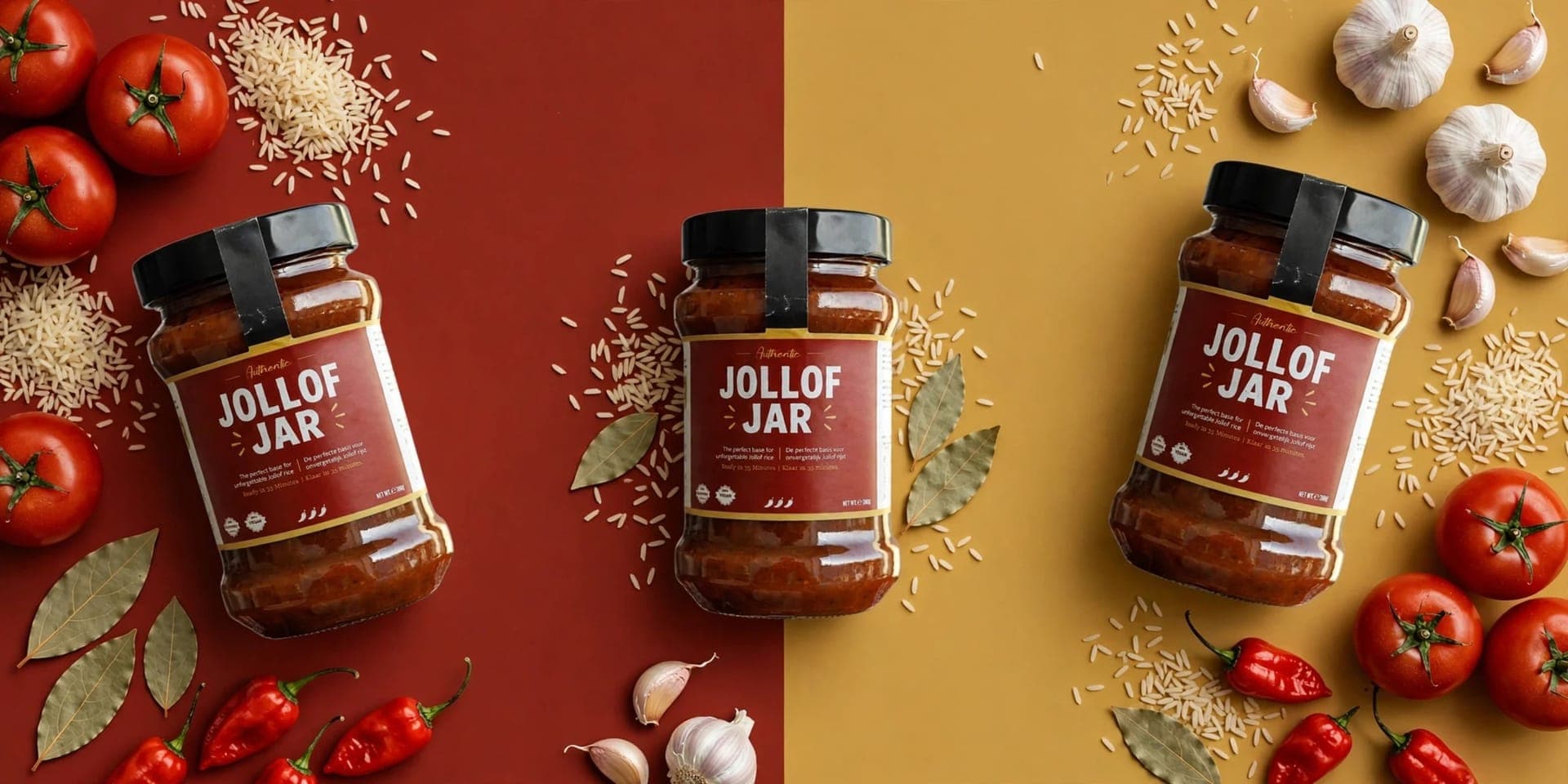
Cook Nigerian-style jollof at home
Jollof Jar is a Nigerian jollof base, already slow-cooked. For the Nigerian style, use parboiled long-grain or sella basmati rice: one 360 g jar, 3 cups of washed rice, 1 cup of broth and 2 cups of water make jollof for four in 35 minutes. Prefer it softer? Use jasmine rice and a little less water.